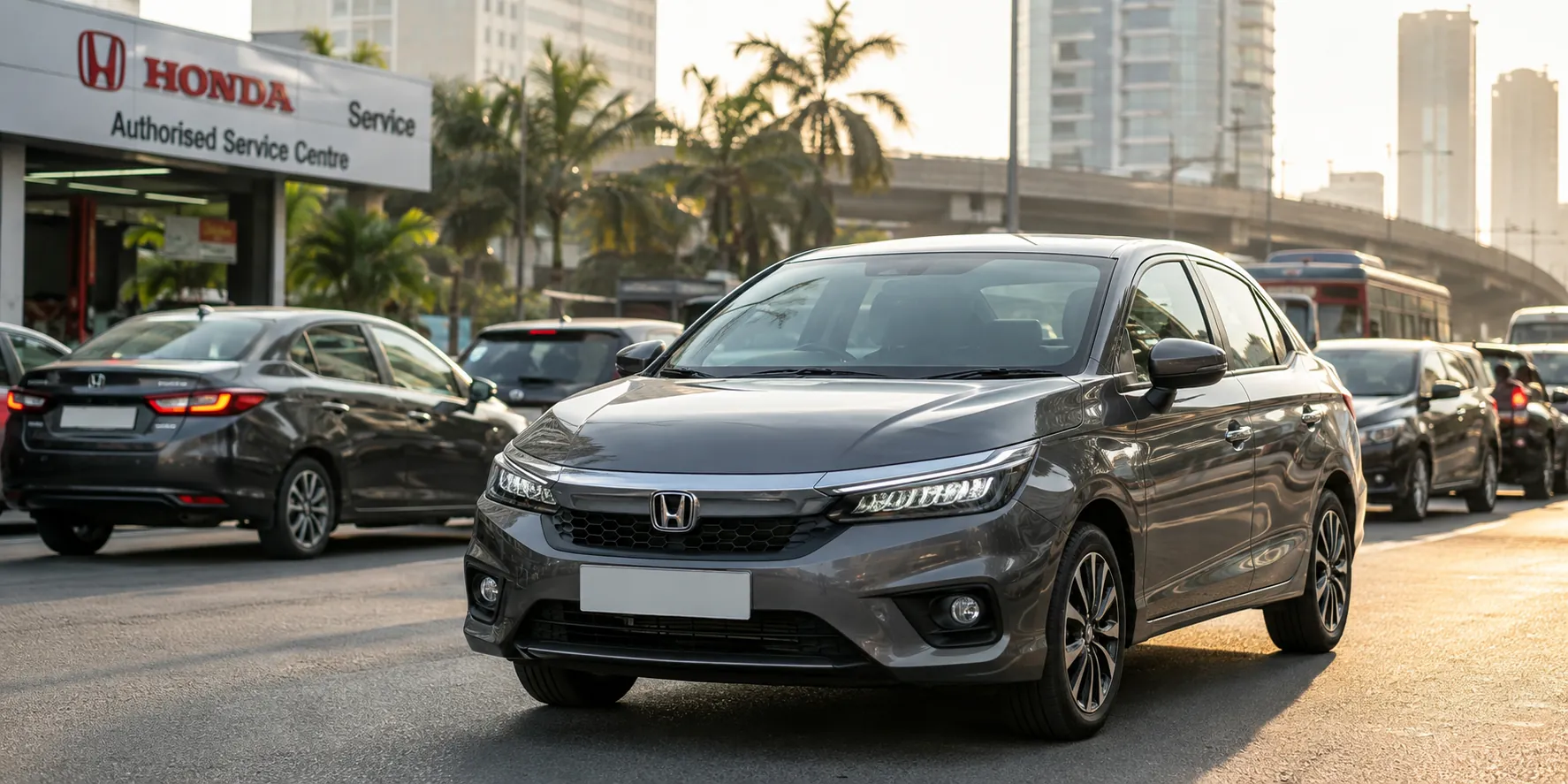
Mumbai is one of the tougher places to own a car. Long hours in bumper-to-bumper traffic, waterlogged monsoon roads and constant stop-go driving all take a quiet toll on a vehicle. So a fair question many Honda owners ask is whether the standard service schedule is enough here, or whether city conditions call for more frequent attention. This guide answers that, and explains how regular servicing protects both your car and your running costs.
We’ll cover how often to service a Honda in Mumbai, whether heavy traffic changes the interval, which parts need closer checks, the warning signs to watch for, and how timely servicing supports performance and fuel efficiency. As a note, service needs and costs vary by model, variant, age and usage, so treat this as general guidance and confirm specifics for your car.
How often should you service a Honda car in Mumbai?
As a general rule, Honda cars follow a periodic maintenance schedule, with an early first service shortly after purchase and regular services after that at set intervals of distance or time, whichever comes first. Your owner’s manual and service booklet specify the exact schedule for your model, and the authorised service centre follows it.
The key points for most owners:
- Follow the schedule in your owner’s manual, based on either kilometres driven or elapsed time, whichever arrives first.
- Don’t skip the first service, which is important for a new car’s long-term health.
- In demanding city conditions, lean toward the time-based interval if you drive a few kilometres but spend long hours in traffic.
If you’re ever unsure of the right interval for your specific Honda, the service centre can confirm it based on your model and usage.
Does Mumbai traffic affect your Honda car’s service interval?
Yes, heavy, stop-go traffic counts as severe usage, and it can mean certain parts of your car need attention sooner than gentle highway driving would suggest. The reason is simple: an hour spent crawling in traffic wears components like the clutch, brakes and battery far more than an hour of steady cruising, even though the odometer barely moves.
This is why owners who drive mostly in the city sometimes find that time and wear, rather than distance, dictate their servicing. Two cars can cover the same kilometres, yet the one driven daily in Mumbai traffic often needs closer, more frequent checks. It doesn’t necessarily change the official service interval, but it does make timely servicing and interim inspections more important.
What parts of a Honda car need more frequent checks in heavy traffic?
Constant braking, idling and low-speed crawling put specific systems under extra strain. In Mumbai conditions, keep a closer eye on:
- Frequent stop-go driving wears brake pads faster, so check them regularly.
- Clutch (manual cars) repeated clutch use in traffic accelerates wear.
- Battery and electricals long idling with AC and accessories running stresses the battery.
- Tyres potholes and monsoon roads affect tyre condition and alignment.
- Air filter and AC city dust and pollution clog filters sooner, affecting airflow and cabin air.
- Coolant and engine cooling prolonged idling in heat makes the cooling system work harder.
A quick check of these between scheduled services can catch small issues before they become expensive ones, especially through the monsoon.
What signs indicate that your Honda car needs servicing before the scheduled interval?
Sometimes a car tells you it needs attention before the next service is due. Don’t wait for the schedule if you notice:
- Warning lights on the dashboard, such as the check-engine or brake indicators.
- Unusual noises squealing brakes, grinding, or new rattles.
- Reduced braking response or a spongy brake pedal.
- A drop in fuel efficiency or a rougher, less responsive engine.
- Difficulty starting, or electrical glitches pointing to a weak battery.
- Vibrations, pulling to one side, or uneven tyre wear.
Any of these is worth getting checked promptly. Catching a problem early is almost always cheaper and safer than letting it develop, particularly with brakes and tyres.
Also Read: Understanding Your Honda’s Warning Lights: A Simple Guide
How can regular servicing improve your Honda car’s performance and fuel efficiency?
Regular servicing keeps a car running the way it was designed to, which shows up directly in performance, efficiency and safety. Fresh engine oil, a clean air filter and correctly maintained systems all help the engine run smoothly and use fuel efficiently, and clogged or worn parts are a common reason mileage quietly drops over time.
The practical benefits of staying on schedule include:
- Better fuel efficiency, as a well-maintained engine and clean filters reduce waste.
- More reliable performance and smoother driving.
- Safer braking, tyres and lights, which matter most in city and monsoon conditions.
- Fewer unexpected breakdowns and lower repair bills over time.
- Better resale value, since a complete service history reassures future buyers.
Using an authorised service centre with genuine Honda parts and trained technicians also helps protect your warranty and keeps the work to manufacturer standards. When your Honda is due, you can book a slot at an authorised Honda service centre Mumbai for scheduled maintenance, periodic checks or a pre-monsoon inspection.
Conclusion
In Mumbai’s stop-go traffic and monsoon conditions, servicing your Honda on time matters even more than usual. Follow the schedule in your owner’s manual, respect the time-based interval if you cover a few kilometres but many hours in traffic, and keep a closer eye on brakes, clutch, battery, tyres and filters. Watch for warning signs, and don’t put off a check when something feels off.
Done consistently, regular servicing protects your car’s performance, fuel efficiency, safety and resale value and usually saves money in the long run. Viva Honda, an authorised Honda car showroom in Mumbai, offers Honda service with genuine parts to keep your car running reliably through whatever the city throws at it. Service costs and needs vary by model and usage, so confirm the details for your specific Honda.
Frequently Asked Questions
How often should I service my Honda car in Mumbai?
Follow the periodic maintenance schedule in your owner’s manual, which is based on kilometres or time, whichever comes first, and don’t skip the first service. In heavy city use, lean on the time-based interval and get interim checks for wear-prone parts like brakes and tyres.
Does driving in heavy traffic increase servicing needs?
It can. Stop-go traffic counts as severe usage and wears parts like brakes, clutch and battery faster than highway driving, even at low mileage. This makes timely servicing and interim inspections more important, even if the official interval stays the same.
What parts wear out faster in Mumbai’s traffic?
Brakes, the clutch in manual cars, the battery, tyres and the air filter tend to face more strain from constant braking, idling, potholes and city dust. Keeping an eye on these between services helps catch problems early.
How do I know if my car needs servicing before the due date?
Watch for dashboard warning lights, unusual noises, weaker braking, a drop in fuel efficiency, hard starting or vibrations. Any of these signs means it’s worth getting the car checked promptly rather than waiting for the scheduled service.
Does regular servicing really improve fuel efficiency?
Yes. Fresh oil, clean filters and well-maintained systems help the engine run efficiently, and neglected or clogged parts are a common reason mileage drops. Regular servicing supports better efficiency, smoother performance and safer driving.
How much does a Honda car service cost?
Service cost varies by model, variant, the type of service and the parts needed, so there’s no single fixed figure. For an accurate estimate, it’s best to check with an authorised Honda service centre when booking your appointment.