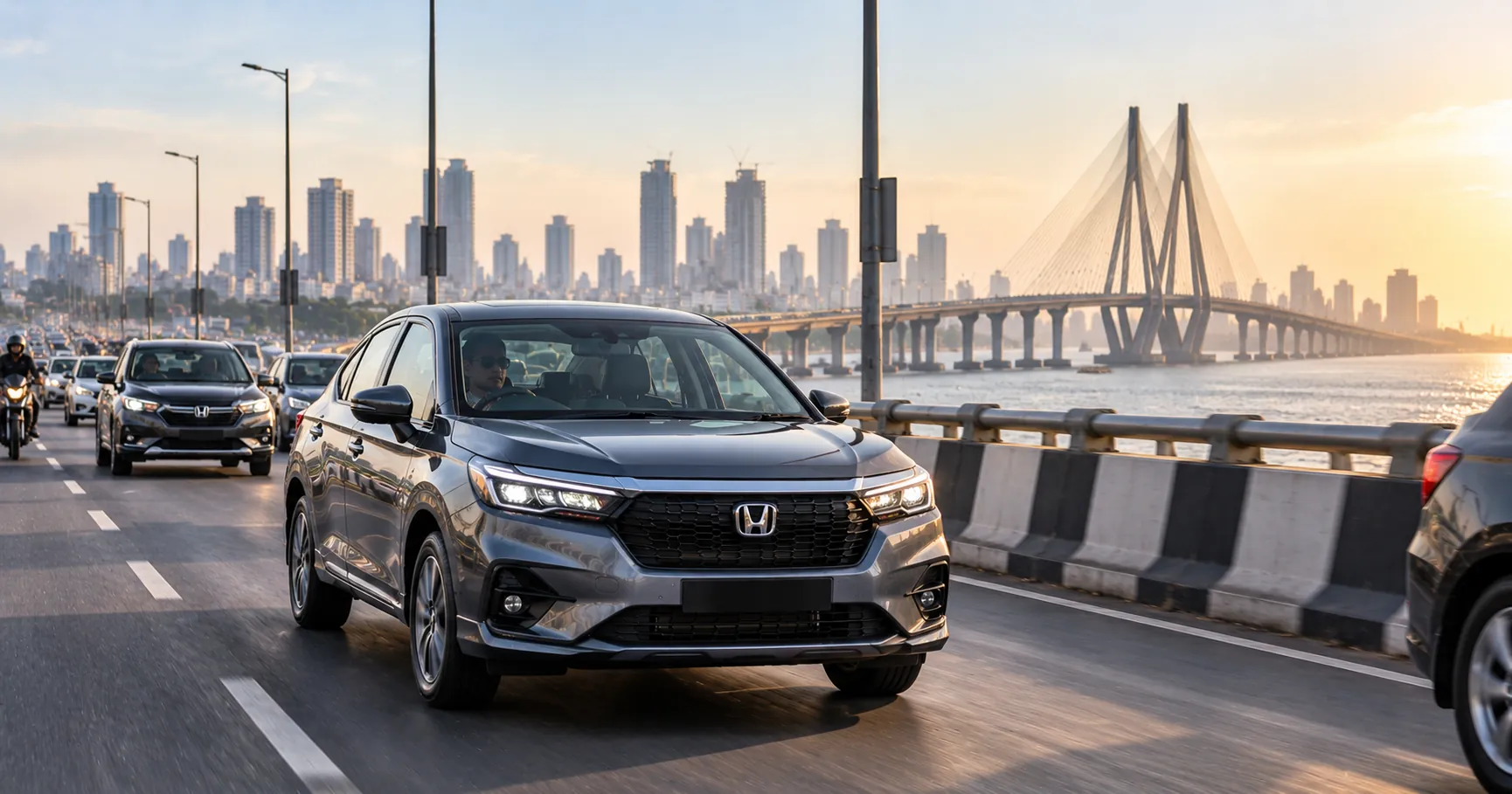
Stop-start traffic on the Western Express Highway during peak hours does something to your fuel gauge that the brochure numbers never mention. Every Honda owner in the city has, at some point, wondered why the mileage they’re getting feels nowhere close to what was promised at the showroom. The good news is that a good chunk of that gap comes down to habits and upkeep, not just traffic being traffic.
Here’s what actually moves the needle on honda car mileage, and what doesn’t.
How Can You Improve Your Honda Car Mileage in Mumbai Traffic?
Start with the basics that people tend to overlook. Tyre pressure, for one. Under-inflated tyres quietly eat into your mileage without any obvious symptoms, and it’s a two-minute check most people just never do. Keep it at the manufacturer-recommended PSI, not whatever feels fine.
Then there’s how you drive in traffic itself. Riding the clutch, unnecessary revving while stationary, and constant hard braking followed by hard acceleration all burn more fuel than smooth, anticipatory driving. In Mumbai’s stop-start conditions specifically, this matters more than highway driving habits, since you’re doing it for a much larger share of your trip.
What Driving Habits Can Improve Fuel Efficiency in City Traffic?
A few habits genuinely make a difference over time:
- Anticipate the stop, don’t react to it: Easing off the accelerator early when you see a signal turning red beats hard braking at the last second.
- Avoid unnecessary idling: If you’re going to be stationary for more than a minute, switching off the engine (where safe and practical) saves more fuel than most people realize.
- Shift at the right RPM: For manual transmissions, shifting up too late keeps the engine working harder than it needs to.
- Skip the unnecessary AC load: Running the AC on max in stationary traffic adds up over a month of daily commutes.
None of these are dramatic changes. They’re small, repeatable habits that compound over weeks of city driving.
Why Does Your Honda Car Give Lower Mileage in Heavy Mumbai Traffic?
Physics, mostly. Stop-start driving means the engine spends more time in inefficient low-gear, low-speed ranges, and every full stop followed by acceleration burns disproportionately more fuel than maintaining a steady speed. Add Mumbai’s humidity and near-constant AC use, and the gap between the certified mileage figure (usually tested under ideal, steady conditions) and your real-world number becomes pretty easy to explain.
This isn’t a flaw specific to your car. It’s how internal combustion engines behave under stop-start load, and it’s why highway mileage almost always beats city mileage across the board.
How Does Regular Honda Car Servicing Affect Mileage?
This is the part people underestimate. A clogged air filter, worn spark plugs, low or dirty engine oil, and poor wheel alignment can each independently drag your mileage down, sometimes noticeably. None of these show up as a dramatic warning light. They just slowly chip away at efficiency until you’re wondering why your mileage dropped without any obvious cause.
Sticking to your recommended service intervals at an authorized Honda car service centres in mumbai keeps all of this in check before it becomes a bigger issue, and it’s usually the single most effective thing you can do if your mileage has been quietly declining.
Also Read: Essential Car Maintenance Tips for Your Honda Car During the Winter Season
What Should You Check If Your Honda Car Mileage Suddenly Drops?
A sudden drop, as opposed to a gradual one, usually points to something specific rather than general wear. Check tyre pressure first, since it’s the easiest and most common culprit. After that, look at whether the air filter is overdue for a change, whether the fuel injectors need cleaning, and whether a recent short trip pattern (lots of short drives instead of longer ones) is skewing your average.
If none of that explains it, it’s worth getting the car checked professionally rather than guessing further. A sudden, unexplained mileage drop can sometimes flag something that’s better caught early.
Frequently Asked Questions
Does AC usage really affect Honda car mileage significantly?
Yes, noticeably, especially in stop-start traffic where the engine is already working harder. Running AC on a high setting for a daily 45-minute commute adds up meaningfully over a month, though the exact impact varies by model and engine size.
Is city mileage always lower than highway mileage for Honda cars?
Almost always, yes. This is true across nearly every car brand, not just Honda. Highway driving maintains a steady speed with far fewer stops, which is inherently more fuel-efficient than constant acceleration and braking.
How often should I service my Honda car to maintain good mileage?
Follow the manufacturer’s recommended service schedule, typically every 10,000 km or once a year, whichever comes first, though this can vary by model. Sticking to it consistently prevents the small mechanical issues that quietly reduce mileage over time.
Can bad fuel quality affect my Honda car’s mileage in Mumbai?
It can, though it’s a less common cause. Inconsistent fuel quality from certain pumps can affect combustion efficiency over time. Sticking to reputable fuel stations is a reasonable precaution, though it’s rarely the primary reason behind a mileage drop.
Small habits and consistent servicing tend to do more for your mileage than any one big fix. If it’s been a while since your last check-up, your nearest Honda car dealer in mumbai can run a quick inspection and tell you exactly where the gap is coming from.